Lynci - AI-Native Framework Overview
Where the name Lynci comes from, why it started as EasyGamePort, how we use AI only as an engineering tool, why there is no lock-in, and how the fixed-price tiers work. A full overview of our AI-native porting framework.
 Bart LuderaHead of Studio & CEO
Many people may not know this, but the name Lynci comes from Lynx - the constellation known in Latin as Lyncis. It felt like a natural fit for us, because Lynci combines two things that are important for LYNXBYTE: our experience in console development and new AI technology.
From EasyGamePort to Lynci
Lynci did not start as Lynci. The first version of the idea was called EasyGamePort. The plan was to build a standalone product that developers could use to make console porting easier. We got quite far and even reached the YC interview stage, but while developing it we started to see that this was not the right direction - thanks to Simon Budziak for this experience!
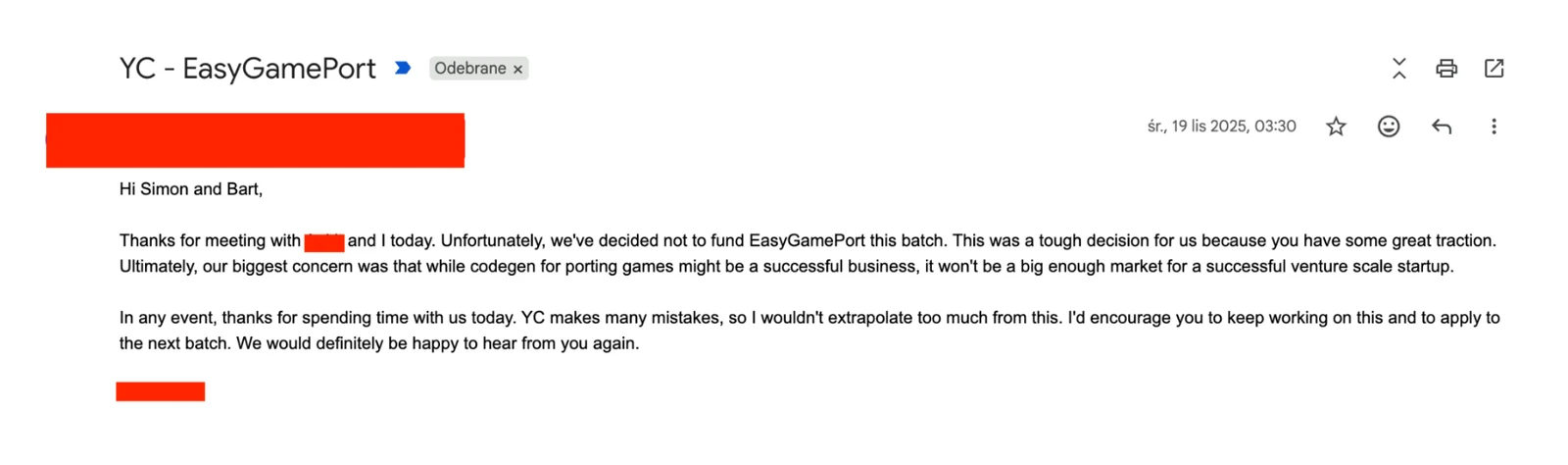
The problem was simple: every game is different. Different engines, architectures, plugins, online systems, rendering solutions and performance issues. A universal self-service tool would either be too limited to solve the difficult parts of porting, or become another technology layer deeply integrated into the project.
We did not want either. So instead of continuing EasyGamePort as a separate product, we turned the technology into our own internal framework. We combined it with our tooling, workflows, platform knowledge and experience from hundreds of console porting tasks and integrations.
That became Lynci.
Why we built Lynci
Even though every game is different, a large part of porting follows similar patterns. On most projects we work with platform APIs, controller support, save systems, achievements, platform services, build systems, SDK integrations, graphics, memory, performance, UI and certification.
Developers still need to understand the game and make the right technical decisions. Lynci does not change that.
What it changes is how much time they spend solving the same type of problem again and again.
If we have already solved a certain integration many times before, there is no reason to start from zero on the next project. Lynci helps us reuse that knowledge, automate repetitive work and give developers a better starting point.
The goal is simple: make porting faster, cheaper and more predictable.
If we can do that, more games become commercially viable to bring to new platforms.
Our approach to AI
We are conservative about where AI should and should not be used.
Lynci does not use generative AI to create game content. It does not generate artwork, characters, dialogue, music, voiceovers, animations, levels, story content or game design.
We are not using AI to replace the creative work of the original development team.
For us, AI is an engineering tool. We use it to analyze code, search for patterns, identify compatibility problems, prepare technical changes and help developers with repetitive implementation work.
At the same time, every production change is reviewed by a human developer. AI-generated code does not go directly into a released game. An engineer reviews it, changes it if needed, rejects it if it is wrong and tests the final implementation. The build then goes through our regular QA process.
LYNXBYTE remains responsible for what we deliver.
That is how we see AI in professional game development: not as a replacement for developers, but as a tool that helps experienced people work faster. We wrote more about this in the real value of AI in game porting.
Because Lynci is focused on engineering rather than content generation, the game remains the work of its original creators. We are changing the porting process, not who created the game.
Is Lynci permanently integrated into the game?
No.
This was one of the main reasons we moved away from the original EasyGamePort concept.
We have worked with projects that depended heavily on proprietary third-party technologies, and we have seen what happens when those technologies stop being supported. Maintaining the game can quickly become a serious problem.
We do not want Lynci to create that dependency.
Lynci is part of our development process, not something that needs to stay inside the shipped game. We use it to analyze the project, prepare changes and speed up development, but the resulting code becomes normal production code inside the project.
Once the port is finished, the developer can continue working on the game internally, release updates without us or move the project to another team.
There is no technical lock-in to Lynci or LYNXBYTE.
Standard porting vs Lynci
The biggest difference is how our developers spend their time.
In a traditional porting process, developers manually inspect the project, identify platform-specific problems, find unsupported systems and implement solutions one by one.
A lot of that work is necessary, but a lot of it is also repetitive.
We estimate that around 70% of a typical port contains some form of recurring engineering work. This does not mean Lynci automatically completes 70% of the port. It means that a large part of the process can be accelerated with better tools, previous knowledge and automation.
That leaves more time for the difficult parts: optimization, architecture, hardware limitations, complex integrations, debugging and project-specific technical decisions.
That is the core idea behind Lynci. We do not want to replace developers. We want them to spend less time on repetitive work and more time on problems where their experience matters.
What does Lynci give you?
From the client's perspective, the result is straightforward:
- lower porting costs
- faster delivery
- more predictable pricing
- fewer technical surprises during production
- more engineering time spent on the difficult parts of the project
By reducing repetitive work, we can reduce the overall effort required to deliver a port. We can also understand the project earlier and estimate it with more confidence.
How much does it cost?
We keep the pricing simple. Lynci projects are divided into three standard fixed-price tiers - Indie, Premium Indie and AA - depending on the technical complexity of the game. The exact price is confirmed after a free technical review.
Each tier is designed for a different type of project, from relatively straightforward ports to games that require more integrations, optimization or platform-specific work.
The standard price includes porting to PS5, Xbox Series X|S, WinGDK and Nintendo Switch 1 and 2.
For publishers with multiple titles, we also offer a Portfolio model with pricing agreed across a larger group of games, as well as a Custom option for projects that do not fit one of the standard tiers.
If a project requires something outside the agreed scope, this is not priced ad hoc during development. Before signing the contract, we define an additional fixed price list for extra work, so the client knows in advance how much each type of change or additional request will cost.
In the Portfolio model, we go one step further. Changes and additional work can also be covered by predefined fixed pricing across the whole cooperation, so there is no need to renegotiate every small change separately.
The goal is simple: you should know the cost structure before the project starts, not discover it halfway through development.
What about additional development?
There is a difference between additional work required to finish the agreed port and new product scope.
If a plugin needs to be replaced, an integration requires more work or additional optimization is needed to reach the agreed target, that is still part of the port.
If the game itself changes, that is different.
Adding another platform, introducing new functionality, adding multiplayer that did not exist before or making major product changes during production becomes additional scope.
The rule is simple: if we need to do it to deliver the agreed port, it is our responsibility. If the product changes, the scope changes.
Who is Lynci for?
Lynci is designed for different types of studios and publishers, depending on the size and complexity of the project.
- Tier 1 / Indie. Best for indie studios with a feature-complete PC build and relatively standard platform requirements. This is a good fit for games that mainly need platform integration, controller support, certification work and regular optimisation.
- Tier 2 / Premium Indie. For larger indie teams or publishers working on premium indie titles that need deeper technical adaptation, more optimisation, additional integrations or more complex platform-specific work.
- Tier 3 / AA. For AA studios and publishers with games that have higher performance requirements, more advanced systems, online functionality or more demanding technical architecture.
- Tier 4 / Portfolio. For studios and publishers planning to port more than three games. Instead of treating every title as a separate deal, we build a dedicated commercial and production model for the whole portfolio, including fixed pricing for predefined changes and additional work.
- Tier 5 / Custom. For AA+, AAA, remakes, remasters, mobile ports and projects that do not fit the standard porting model. These projects are scoped individually because the technical requirements can be very different from a regular console port.
The idea is to keep the standard projects simple and predictable, while still having a clear model for larger or more complex productions.
Which engines does Lynci support?
Currently, Lynci supports Unreal Engine and Unity, and these will remain the two main engines we focus on long term, as they are the most widely used engines in the industry.
However, we are also planning several additional products that will expand Lynci beyond Unreal and Unity, including:
- porting support for custom engines
- simplified remakes and remasters from custom engines to Unreal Engine 5
- porting HTML-based games to consoles
We cannot share too many details yet, but we plan to expand much more aggressively into these areas in the second half of 2027.
What comes next?
Lynci is becoming a core part of how we approach porting at LYNXBYTE, and it will continue to improve with every project. If you want the story of where it started, read Introducing Lynci.
If you are interested in using Lynci for your game, visit the Lynci page. We can help you get started, review your project and determine which pricing tier your game fits into based on its technical requirements.
Frequently Asked Questions
What is Lynci?
Lynci is LYNXBYTE GAMES' AI-native framework for game porting. It combines our tooling, workflows and platform knowledge with AI-assisted engineering, so recurring porting work is faster and more predictable, while experienced developers make the technical decisions.
Does Lynci use generative AI to create game content?
No. Lynci does not generate artwork, characters, dialogue, music, voiceovers, animations, levels, story content or game design. AI is used only as an engineering tool, and every production change is reviewed by a human developer and tested through regular QA.
Does Lynci stay inside the shipped game?
No. Lynci is part of our development process, not part of the game. The resulting code is normal production code, so the developer can keep working on the game, release updates without us or move the project to another team. There is no technical lock-in.
How much does a Lynci port cost?
Standard Lynci projects come in three fixed-price tiers - Indie, Premium Indie and AA - depending on the technical complexity of the game. The exact price is confirmed after a free technical review. There is also a Portfolio model for more than three games and a Custom option for AA+, AAA, remakes, remasters, mobile ports and other non-standard projects.
Which engines does Lynci support?
Unreal Engine and Unity. Support for custom engines, simplified remakes and remasters from custom engines to Unreal Engine 5, and porting HTML-based games to consoles are planned, with a bigger expansion into these areas in the second half of 2027.